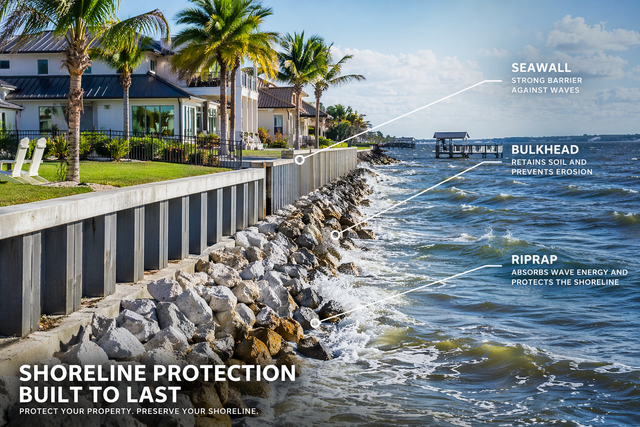
Shoreline erosion is one of the most common problems for waterfront property owners on the Texas Gulf Coast. Wind-driven waves, boat wake, changing tides, storm surge, and unstable soils gradually wear away the bank. What often starts as a small loss of soil can turn into undercut slopes, damaged landscaping, unsafe access to the water, and expensive repairs. The earlier the problem is addressed, the more options a property owner usually has. Property owners looking for reliable solutions often turn to shoreprotectteam.com for professional shoreline protection services.
For many owners, the first challenge is understanding that erosion is not always dramatic at the beginning. In many cases, the shoreline declines little by little: the edge becomes uneven, soil starts washing out after storms, grass disappears near the waterline, and the bank becomes steeper each season. If these warning signs are ignored, the shoreline may continue to retreat and place more pressure on the surrounding area.
Why erosion is so common on the Texas Gulf Coast
The Texas Gulf Coast is exposed to conditions that make waterfront erosion especially difficult to control without a proper protection system. Coastal properties often experience repeated wave impact, changing water conditions, and periods of severe weather. Even sites that look calm most of the year can suffer long-term shoreline loss because erosion is a cumulative process.
- Wave energy: Repeated wave action removes soil from the shoreline a little at a time and weakens the bank.
- Storm activity: Tropical storms and hurricanes can accelerate erosion in a very short period.
- Water level changes: Tidal movement and seasonal fluctuations increase stress on different parts of the shoreline.
- Soil instability: Soft, loose, or sandy soils are more vulnerable to washout and slope failure.
- Boat wake: In canals, bays, and navigable waterfront areas, constant wake can intensify bank erosion.
- Lack of reinforcement: An unprotected shoreline has no structural barrier to resist ongoing water impact.
How to recognize an erosion problem before it gets worse
A useful shoreline protection plan starts with noticing the right warning signs. Property owners often wait until major damage appears, but smaller indicators usually show up first.
- The shoreline edge is moving farther inland.
- The bank is becoming steeper or more uneven.
- Soil is washing into the water after rain or wind events.
- Grass or groundcover near the edge is thinning or disappearing.
- Small voids, cracks, or undercut areas are visible along the bank.
- Existing landscaping or access paths are getting closer to the water.
When these issues appear, it is usually better to evaluate the shoreline sooner rather than later. A smaller problem is often easier to stabilize than a shoreline that has already suffered major loss.
Effective ways to protect a Gulf Coast shoreline
There is no single solution that fits every waterfront property. The best approach depends on the shoreline shape, soil conditions, wave exposure, intended use of the site, and the owner’s long-term goals. The most effective systems are selected according to actual site conditions, not guesswork.
Bulkheads
Bulkheads are vertical retaining structures built to hold the shoreline in place. They are commonly used where a property owner wants a defined edge and needs to prevent further soil loss. Bulkheads can be practical when space is limited and the shoreline must remain stable near lawns, buildings, or access areas.
- Help retain soil behind the shoreline.
- Create a clear and controlled waterfront edge.
- Can work well where usable land must be preserved.
- Often chosen for residential waterfront lots with limited setback.
Seawalls
Seawalls are designed to provide strong structural shoreline protection in areas exposed to more demanding water conditions. They are generally selected when wave impact, long-term exposure, or site conditions require a more substantial barrier.
- Provide a durable line of defense against wave action.
- Can help protect land and nearby improvements from ongoing shoreline loss.
- Suitable for sites where long-term structural protection is a priority.
- Often considered for more exposed waterfront locations.
Riprap
Riprap uses large stone placed along the shoreline to absorb and disperse wave energy. Instead of forcing the water to hit a flat surface directly, the stone layer reduces the impact and helps stabilize the bank. This method is often used when a more natural-looking shoreline treatment is preferred.
- Reduces wave energy through the stone surface.
- Helps slow down soil loss along the bank.
- Can blend more naturally with the shoreline environment.
- Works well on many sloped banks and exposed edges.
Vegetation and natural reinforcement
Planting alone is not a complete answer for every Gulf Coast shoreline, but vegetation can still play a supporting role. Root systems may help stabilize upper soil layers and reduce surface washout. In some cases, natural reinforcement can complement a larger shoreline protection system.
- Helps support surface soil stability.
- Improves drainage and reduces minor surface erosion.
- Can enhance the appearance of the waterfront.
- Works best when combined with an appropriate structural solution where needed.
How to choose the right shoreline protection method
Choosing the wrong system can lead to unnecessary cost, poor performance, and repeated repairs. A useful decision should be based on how the site actually behaves, not only on appearance or initial price.
- Look at the water conditions. A sheltered shoreline and an exposed Gulf-facing site do not require the same level of protection.
- Review the bank shape. A steep failing bank and a gradually sloped shoreline need different design approaches.
- Consider the soil. Loose or unstable soils may need more structural support than compact, stable ground.
- Define the goal. Some owners want maximum land retention, while others prefer a more natural shoreline treatment.
- Think long term. The cheapest short-term option is not always the most effective long-term solution.
What property owners often overlook
Many waterfront owners focus only on the visible edge of the shoreline, but erosion problems usually involve more than the surface. Water movement, bank angle, drainage patterns, and soil behavior all affect performance. A shoreline may look stable during calm weather and still fail over time if the system does not match actual site conditions.
- Surface appearance does not always reflect subsurface instability.
- Minor erosion today can become structural damage later.
- Drainage and runoff from the property can worsen shoreline loss.
- One neighbor’s solution may not be right for the next property.
When it makes sense to act
It is usually wise to address erosion when the first reliable signs appear, not after major land loss has already occurred. Early action may help preserve more of the site and reduce the scale of future work. Waiting too long often means the shoreline requires a larger and more expensive solution.
If your waterfront edge is already showing signs of washout, retreat, or instability, it is a good time to review practical shoreline protection solutions and determine which type of construction is more suitable for your property.
Final thoughts
Protecting a shoreline on the Texas Gulf Coast is not only about stopping visible erosion. It is about preserving land, maintaining safe use of the property, and reducing the risk of more serious damage over time. Whether a site needs a bulkhead, seawall, riprap, or a combined approach, the most important step is choosing a solution that matches real shoreline conditions and long-term property needs.